Walk into a few dojos in Dubai and you may notice that karate does not look the same everywhere. Stances, movements, and even class rhythm can differ. That is because karate has several major styles, each with its own history and focus.
If you are choosing a style for yourself or your child, this guide explains how Shotokan karate compares with the others, so you can decide with confidence.
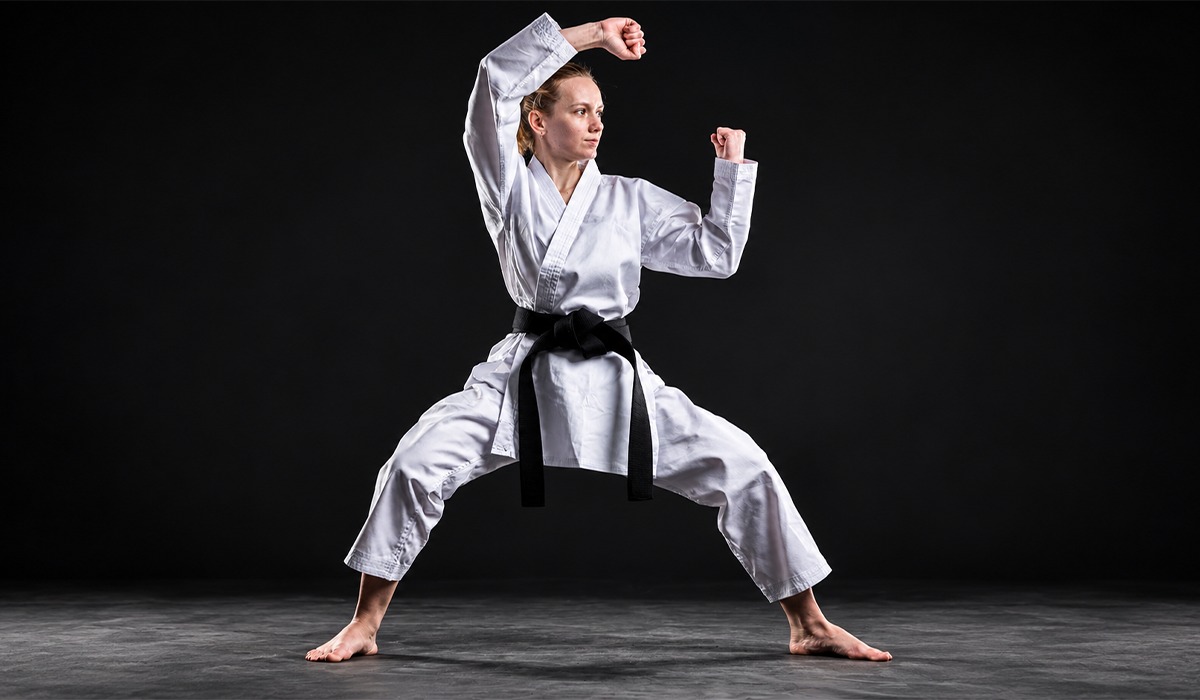
Karate began in Okinawa, Japan, where local fighting methods blended with Chinese martial arts over many years. In the early 20th century, it spread to mainland Japan, and teachers began to shape it into different styles.
The four styles most often recognized in Japan are Shotokan, Goju-ryu, Shito-ryu, and Wado-ryu. Kyokushin, a full-contact style, is also hugely popular worldwide.
Shotokan was developed by Gichin Funakoshi, who is widely regarded as the father of modern karate. “Shoto” was his pen name, and “kan” means hall, so Shotokan means “Shoto’s hall.”
It is one of the most widely practiced karate styles in the world. Its key features are:
Strong, deep stances that build leg power and stability
Linear, direct techniques that are powerful and clear
Emphasis on kime (focus): delivering technique with full, controlled power at the moment of impact
Strict basics (kihon), repeated until they are precise
Kata and kumite practiced together as a complete system
This clear, structured approach is one reason Shotokan is so popular with beginners. You can read more about it on our Shotokan style page.
Goju means “hard-soft.” This style blends hard, direct strikes with soft, circular blocks and strong breathing techniques. It tends to work at closer range and uses more circular movements than Shotokan.
Wado-ryu emphasizes evasion and body movement. Practitioners avoid taking direct force by shifting and turning, and the style has influences from Japanese jujutsu. It generally uses higher, more natural stances than Shotokan.
Shito-ryu blends elements from several Okinawan traditions and is known for having a large number of kata. Practitioners often train in a wide range of techniques and rhythms.
Kyokushin is a full-contact style known for tough conditioning and knockdown competition. It is physically demanding and has a stronger focus on hard sparring than most other styles.
Style | Main Focus | Stances and Movement | Sparring Style |
Shotokan | Power, precision, strong basics | Deep, long stances; linear movement | Controlled, with strong technique and distance |
Goju-ryu | Hard and soft techniques, breathing | Natural stances; circular movement | Close range |
Wado-ryu | Evasion and flow | Higher stances; body shifting | Light, fast, and evasive |
Shito-ryu | Large kata variety | Mix of stances | Varies by school |
Kyokushin | Conditioning and full contact | Strong, grounded stances | Full-contact knockdown |
The details can vary between schools and instructors, so treat this as a general guide.
Shotokan’s step-by-step structure makes it easy to follow. Children and adults both learn the same fundamentals: stance, balance, breathing, and form. There is a clear path forward, marked by belts.
Here is why many families choose it:
Clear structure: Every class has a purpose, from warm-up to kata
Strong fundamentals: Good technique builds confidence early
Discipline and respect: Etiquette is part of every lesson
Visible progress: Belt gradings give children and adults clear goals
Suitable for all ages: Beginners can start at their own pace
See how our rank and belt system works.
The best style depends on your goals:
Choose Shotokan if you:
Want a structured, traditional path with strong basics
Are starting as a complete beginner or choosing karate for a child
Value discipline, precision, and technique
Choose a style like Goju-ryu or Wado-ryu if you:
Prefer a softer, more circular, or evasive approach
Choose Kyokushin if you:
Want hard conditioning and full-contact sparring
Honestly, the quality of the instructor and the dojo matters more than the style name. Whichever you pick, try a class first.
At Karate365, we teach authentic JKA Shotokan karate. We have trained students in Dubai since 2019, and here is what you can expect:
JKA-certified instructors focused on technique, discipline, and growth
Affiliations: Japan Karate Association Tokyo, the UAE Ministry of Youth & Sports, and the UAE Karate Federation
Experience: Over 5,000 students trained and 50+ black belt holders
Classes for everyone: Kids and adults
Locations: Dubai Silicon Oasis, with programs also at karate class in Al Furjan Investment Park
No single style is best for everyone. Shotokan is popular because of its clear structure and strong basics, but the right style depends on your goals and the quality of the instructor.
Yes. Its step-by-step approach and focus on fundamentals make it very beginner-friendly for both children and adults.
Shotokan uses deeper stances and linear, powerful techniques. Goju-ryu mixes hard and soft movements, with more circular techniques and a focus on breathing.
Generally, no. Shotokan sparring is typically controlled, with emphasis on technique and distance. Kyokushin is the style best known for full-contact sparring.
Yes, though you may need to adjust to different stances and terminology. Many students enjoy cross-training once they have a strong foundation.
Shotokan karate stands out for its strong basics, powerful technique, and disciplined structure. Other styles offer different strengths, from the circular flow of Goju-ryu to the full-contact intensity of Kyokushin. The best choice is the one that fits your goals and keeps you motivated.
Curious to try it yourself? Book a free trial class at Karate365 in karate classes in Dubai silicon Oasis, Al Furjan, or Dubai Investment Park. Contact us or message us on WhatsApp to get started.